
EN 61010 Explained: Safety Requirements for Electrical Test Equipment
What Is EN 61010?
EN 61010 is the European adoption of the international IEC 61010 standard, published as BS EN 61010 in the UK. It defines the safety requirements for electrical equipment used in measurement, control, and laboratory environments. If you use, specify, or purchase test and measurement instruments, this is the standard that governs how safe those instruments are to operate.
The standard is maintained by IEC Technical Committee 66 and is recognised globally. It is also adopted as a UL and ANSI standard in the United States, making it effectively the universal safety benchmark for T&M equipment.
What Does EN 61010 Cover?
EN 61010-1 (the general requirements part) applies to equipment that tests, measures, indicates, or records electrical or physical quantities. This includes multimeters, power analysers, LCR meters, data loggers, signal generators, laboratory power supplies, transducers, and calibration standards.
The standard addresses several critical hazard categories. For electric shock protection, it mandates design requirements to prevent users from contacting live parts, including insulation specifications, protective grounding, and the use of barriers and enclosures. For mechanical hazards, it requires equipment to withstand mechanical stresses during normal operation and foreseeable misuse. For thermal safety, it sets guidelines to manage heat emissions so that equipment surfaces do not reach temperatures that could cause burns or damage.
EN 61010 does not cover electromagnetic compatibility (EMC), transport packaging, or performance characteristics unrelated to safety.
Measurement Categories Explained
One of the most practically important concepts in EN 61010 is the measurement category system, which rates equipment for use at different points in an electrical installation. These categories — commonly marked as CAT II, CAT III, or CAT IV on instrument faceplates — indicate the maximum transient overvoltage the equipment can safely withstand.
CAT II — Local Level
Equipment rated CAT II is designed for measurements on circuits directly connected to the low-voltage mains via a standard socket outlet. This covers appliances, portable tools, and most bench-top equipment. Typical transient withstand at 300V CAT II is 2,500V.
CAT III — Distribution Level
CAT III covers measurements on equipment permanently installed in a building’s fixed wiring, such as distribution boards, bus bars, junction boxes, and industrial machinery. Transient energy is higher because there is less impedance to dampen surges. Typical transient withstand at 300V CAT III is 4,000V.
CAT IV — Origin of Installation
CAT IV is the highest category, applying to measurements at the origin of the electrical supply — utility meters, main service fuses, primary overcurrent protection, and outdoor conductors. Source impedance is at its lowest (around 2Ω), meaning transient energy and potential fault currents are at their maximum. Typical transient withstand at 300V CAT IV is 6,000V.
Why Category Ratings Matter
Using an instrument with an insufficient CAT rating is dangerous. A CAT II meter used at a distribution board could fail catastrophically during a transient event, potentially causing an arc flash. Always match the measurement category of your equipment to the point in the installation where you are measuring.
Parts of EN 61010
The EN 61010 series is split into multiple parts addressing different equipment types. EN 61010-1 covers general requirements applicable to all equipment in scope. EN 61010-2-030 covers specific requirements for equipment with testing and measuring circuits. EN 61010-2-032 covers hand-held and hand-manipulated current sensors. EN 61010-2-033 covers hand-held multimeters and similar instruments for mains voltage measurements. EN 61010-031 covers safety requirements for hand-held probe assemblies for electrical measurement and testing.
When specifying or purchasing test equipment, check that the instrument is certified to the relevant parts of EN 61010 for your intended application.
What EN 61010 Means for Equipment Buyers
When selecting test and measurement equipment, EN 61010 compliance should be a baseline requirement. Specifically, you should verify the measurement category rating matches your working environment, confirm the instrument carries a valid test report or certification to EN 61010-1 and the relevant part-2 standard, check the rated voltage alongside the category (CAT III 600V offers more protection than CAT III 300V), and ensure accessories such as test leads and probes are also rated to the same category and voltage.
Reputable manufacturers will clearly mark the measurement category and voltage rating on the instrument itself, not just in the datasheet.
EN 61010 and Caltest Instruments
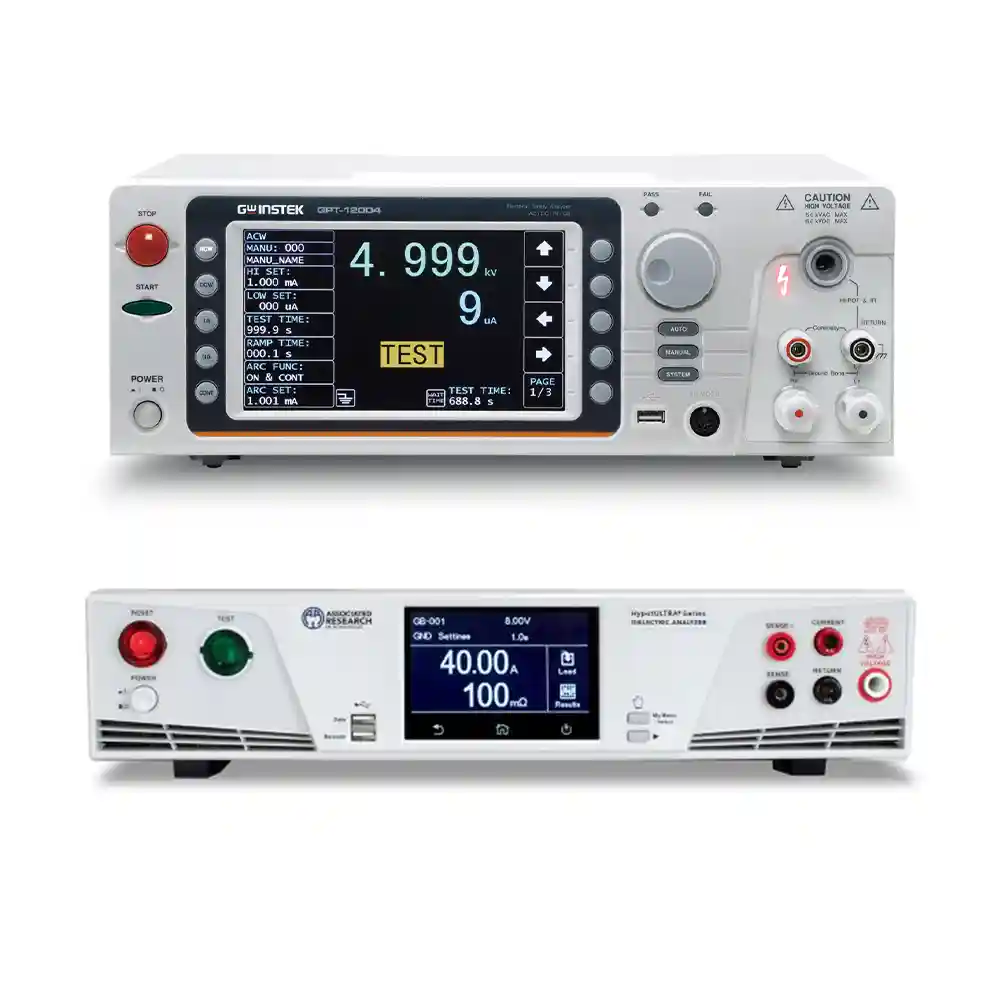
All test and measurement equipment supplied by Caltest Instruments is designed and certified to meet applicable safety standards, including EN 61010. Our product range from manufacturers such as GW Instek, Associated Research, and Pacific Power Source is tested to the relevant parts of the standard. If you need guidance on selecting equipment with the correct safety ratings for your application, our technical team can help.
