


Products




Frequently Asked Questions
What is a power analyser and what does it measure?
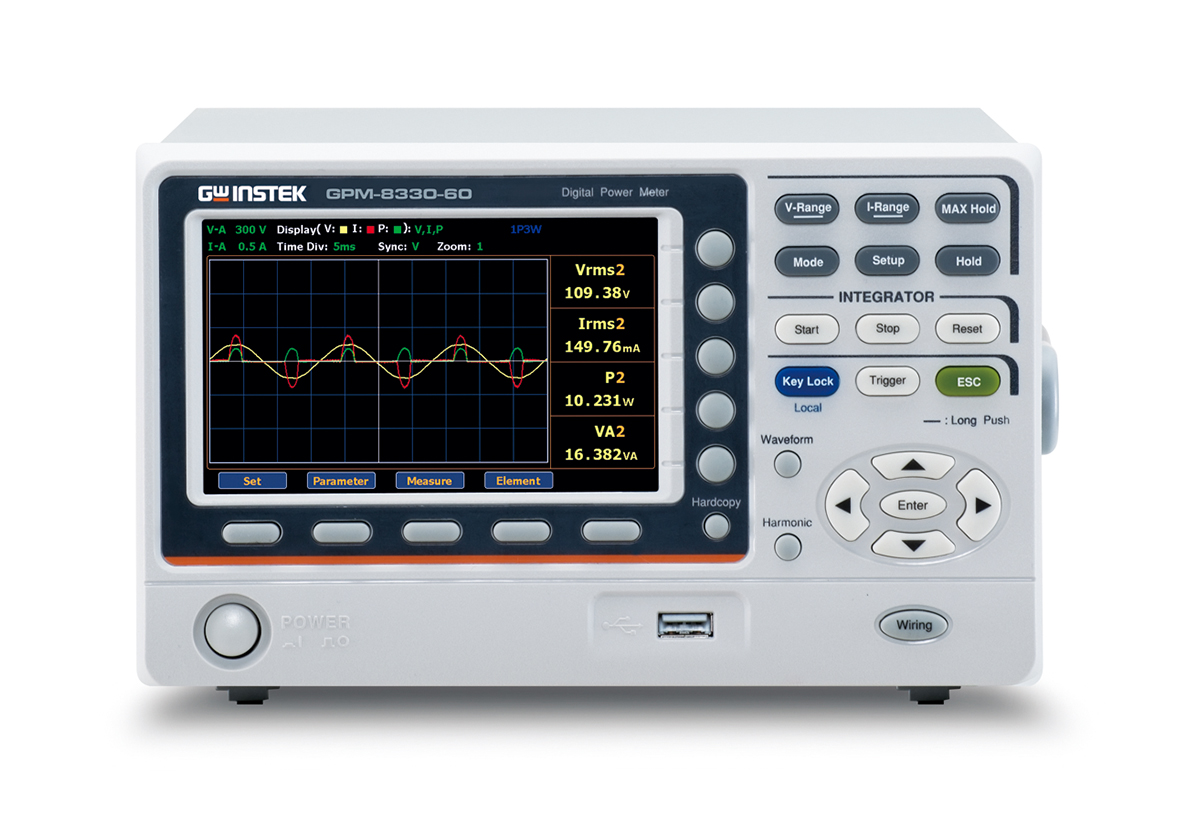
A power analyser is a precision instrument that simultaneously measures voltage, current, and their phase relationship to calculate real power (watts), apparent power (VA), reactive power (VAR), power factor, and efficiency. Unlike a simple multimeter that measures voltage and current separately, a power analyser captures these parameters synchronously at high speed, enabling accurate measurement of true power consumption, conversion efficiency, and power quality — including harmonics, crest factor, and total harmonic distortion (THD).
What is the difference between real power, apparent power, and reactive power?
Real power (W) is the energy actually consumed by a load and doing useful work. Apparent power (VA) is the product of RMS voltage and RMS current — it represents the total power flowing in the circuit. Reactive power (VAR) is the portion that oscillates between source and load without doing useful work, caused by capacitive or inductive elements. The relationship between them is described by power factor (PF), which ranges from 0 to 1. A power analyser measures all three simultaneously, which is essential for understanding the true efficiency and loading characteristics of a device.
How many channels do I need on a power analyser?
It depends on what you are measuring. A single-channel analyser is sufficient for basic AC or DC power measurement on a single-phase device. For three-phase systems you typically need three channels using the three-wattmeter method. If you need to measure conversion efficiency — for example the input and output of a power supply or inverter — you will need channels on both sides, so a motor drive measuring electrical input and mechanical output might require four or more channels. Many analysers are modular, so you can start with fewer channels and expand later.
Why does measurement bandwidth matter in a power analyser?
Bandwidth determines the highest-frequency signal components your analyser can accurately capture. For 50/60Hz mains power measurement a few kilohertz is usually sufficient, but modern switch-mode power supplies, motor drives, and inverters operate at switching frequencies from tens of kHz to several hundred kHz. If your analyser's bandwidth is lower than the switching frequency, it will miss high-frequency current and voltage components, leading to significant errors in power and efficiency readings. For power electronics work, look for an analyser with bandwidth of at least 1 MHz.
What applications are power analysers commonly used for?
Power analysers are used wherever accurate power measurement matters. Common applications include efficiency testing of power supplies, inverters, and motor drives; IEC 62301 standby power measurement for energy labelling; EN 61000-3-2 harmonic compliance testing; EV drivetrain efficiency mapping across motor, inverter, and battery; transformer loss measurement; LED driver and lighting efficiency testing; and renewable energy system commissioning. They are equally at home in R&D labs for product development and on production lines for quality assurance.
What is the difference between a power analyser and a power quality analyser?
A power analyser focuses on high-accuracy measurement of power, efficiency, and harmonics — typically used to characterise a specific device or system under controlled conditions in a lab. A power quality analyser is designed for monitoring mains supply quality over extended periods in the field, recording events like voltage dips, swells, flicker, and transients against standards such as EN 50160. There is some overlap, but if your primary goal is precision efficiency measurement and harmonic analysis of a product, a power analyser is the right tool.
Can I rent a power analyser from Caltest?
Yes. All power analysers in our range are available to rent as well as buy. Rental is a cost-effective option for short-term projects, one-off compliance testing, or evaluating an instrument before committing to purchase. Rental units are supplied fully calibrated and ready to use, with full applications support included. Contact our team to discuss your requirements and get a rental quote.
