


Products


Frequently Asked Questions
What is hipot testing and why is it required?
Hipot testing, also called dielectric withstand testing, applies a high voltage between a product's live conductors and its accessible metalwork to prove the insulation will not break down under fault or transient conditions. It is the single most common electrical safety test and is required by most product safety standards, including IEC 62368-1 for IT and AV equipment, IEC 60601-1 for medical devices, EN 60204-1 for machinery and EN 61010-1 for laboratory equipment. A pass confirms the insulation can withstand voltages well above normal operating levels, which is what protects the user if something goes wrong.
What is the difference between hipot, ground bond, insulation resistance and leakage current testing?
They test four different aspects of the same safety case. Hipot proves the insulation will not break down under high voltage stress. Ground bond forces a high current, set by the standard, through the protective earth path and measures its resistance, confirming fault current can flow safely to earth. Insulation resistance applies a lower DC voltage and measures resistance in megohms, which is better at detecting gradual degradation and contamination than a pass/fail hipot. Leakage current measures the small current that flows to earth or to accessible surfaces during normal operation, which matters most for medical and household equipment. Most safety standards require several of these, which is why multi-function analysers are common on production lines.
Should I use AC or DC hipot testing?
AC hipot stresses insulation in both polarities and will find defects that a DC test can miss, which is why most standards specify it by default. The drawback is that AC charges any capacitance in the product, so units with large Y-capacitors or long cable runs draw significant charging current that can mask a real fault or trip the tester. DC hipot avoids that, measures true leakage rather than charging current, and is often required for products with high capacitance or battery-powered equipment. Where a standard permits DC as an alternative, the test voltage is usually raised, commonly by a factor of 1.414. Our analysers support both, so you are not locked into one approach.
Which safety standards apply to my product?
It depends on the product category. IEC 62368-1 covers IT, audio and video equipment and has replaced the older IEC 60950-1 and IEC 60065. IEC 60601-1 covers medical electrical equipment and has the strictest leakage current limits. EN 60204-1 covers the electrical equipment of machinery, EN 61010-1 covers laboratory and measurement equipment, and IEC 60335 covers household appliances. Each specifies its own test voltages, durations and pass limits, and most require a combination of hipot, ground bond and leakage current testing. If you are unsure which applies, contact our team with a description of the product and we can help you identify the standard that applies and an appropriate instrument.
What should I look for in a production-line safety tester?
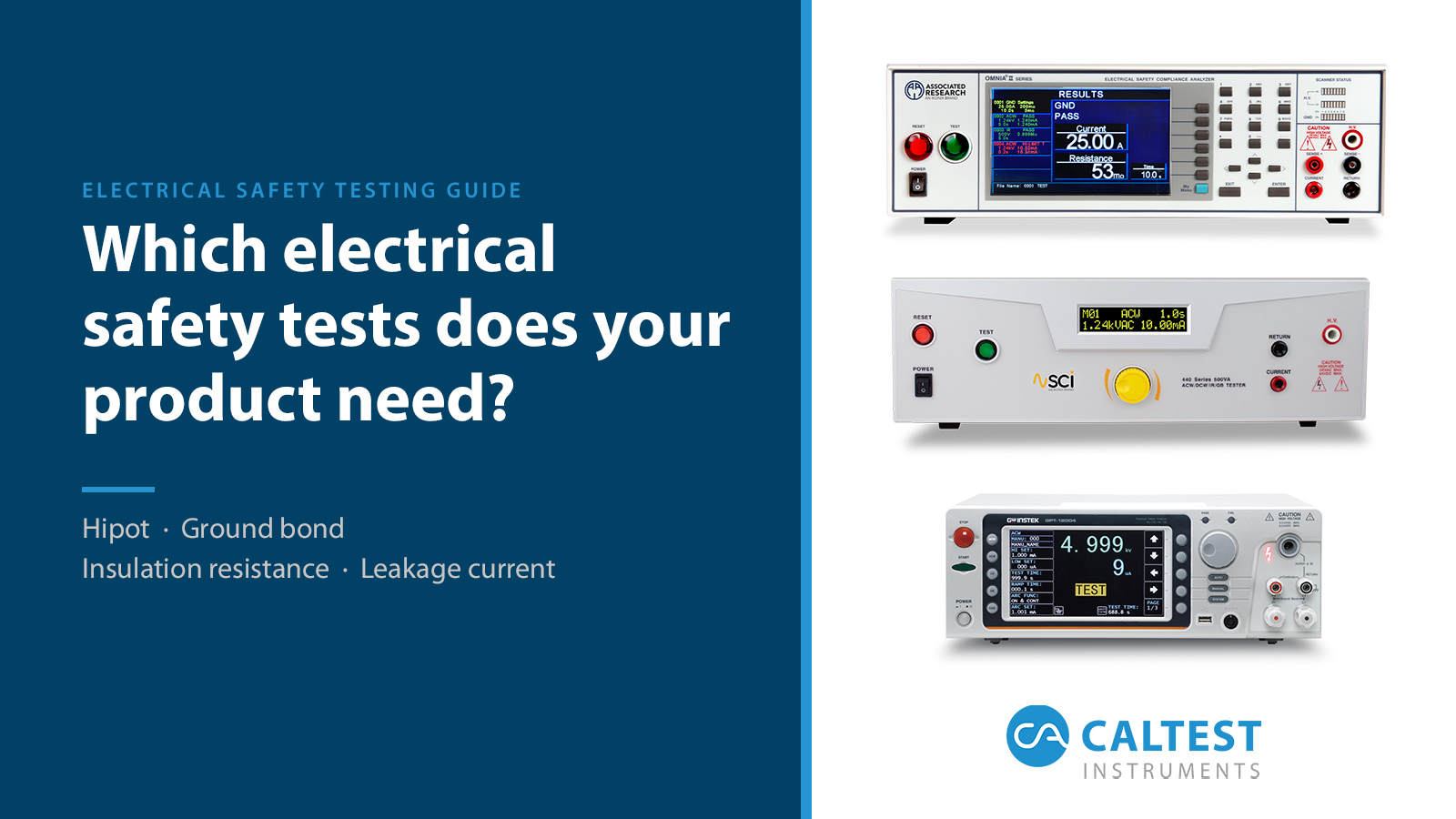
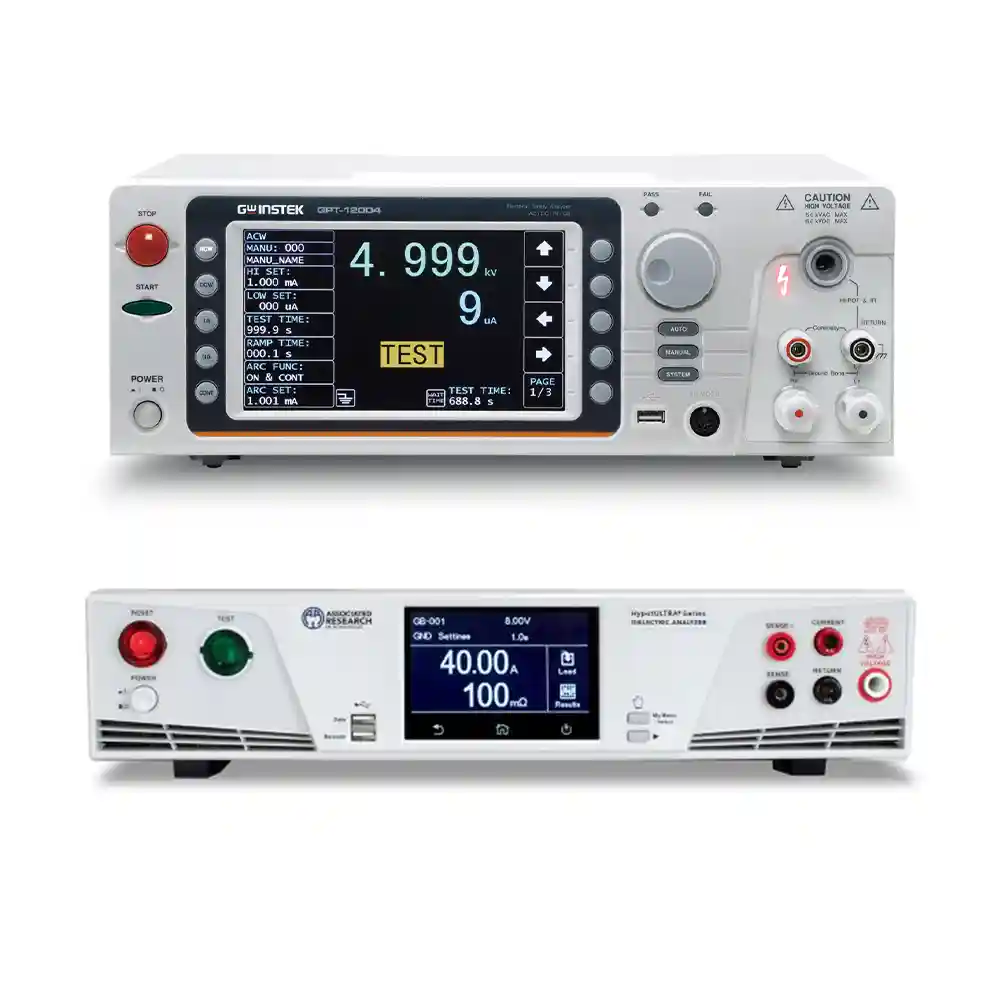
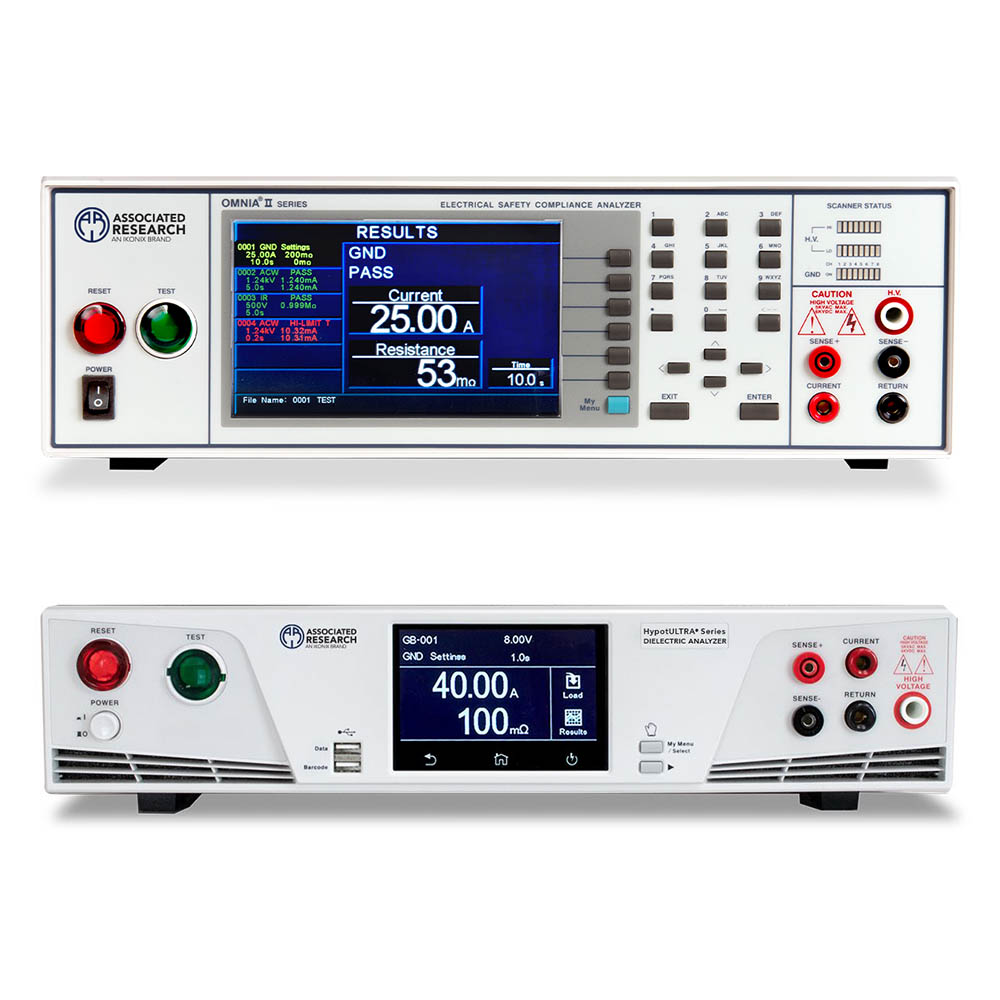
Cycle time and repeatability matter more than raw specification on a production line. Look for programmable test sequences so hipot, ground bond and leakage run automatically in one pass, clear pass/fail indication that an operator cannot misread, and interlock and safety-shield support to protect the operator. Barcode scanner input and database or PLC connectivity remove manual data entry and give you traceability per unit. Arc detection catches intermittent faults that a simple current-threshold trip would pass. Instruments like the Associated Research Omnia II and HypotULTRA Series and the GW Instek GPT-15000 range are built specifically for this kind of high-volume, audited testing.
Can I rent an electrical safety tester?
Yes. Hipot testers, ground bond testers and multi-function safety analysers are all available for short-term and long-term rental as well as purchase. Rental suits one-off certification runs, covering a production peak, providing a temporary replacement while an instrument is away for calibration, or trialling a model before committing to a fleet. Rental units are supplied calibrated and ready to use, with applications support included. Contact our team with your test voltages, currents and duration for a quote.